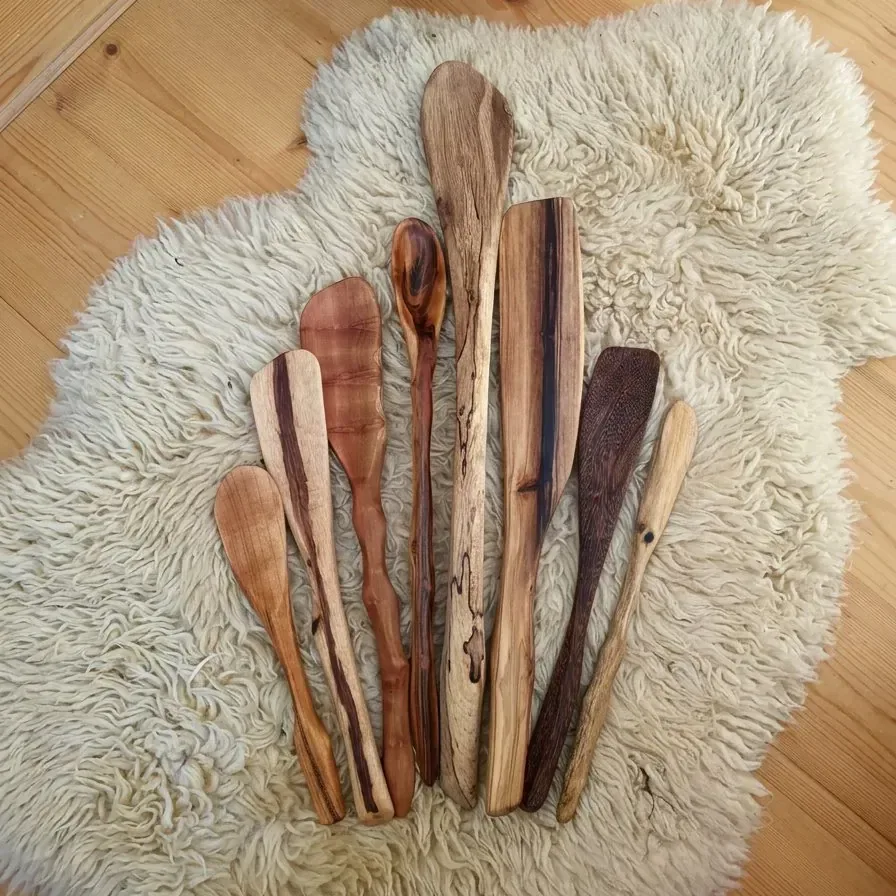
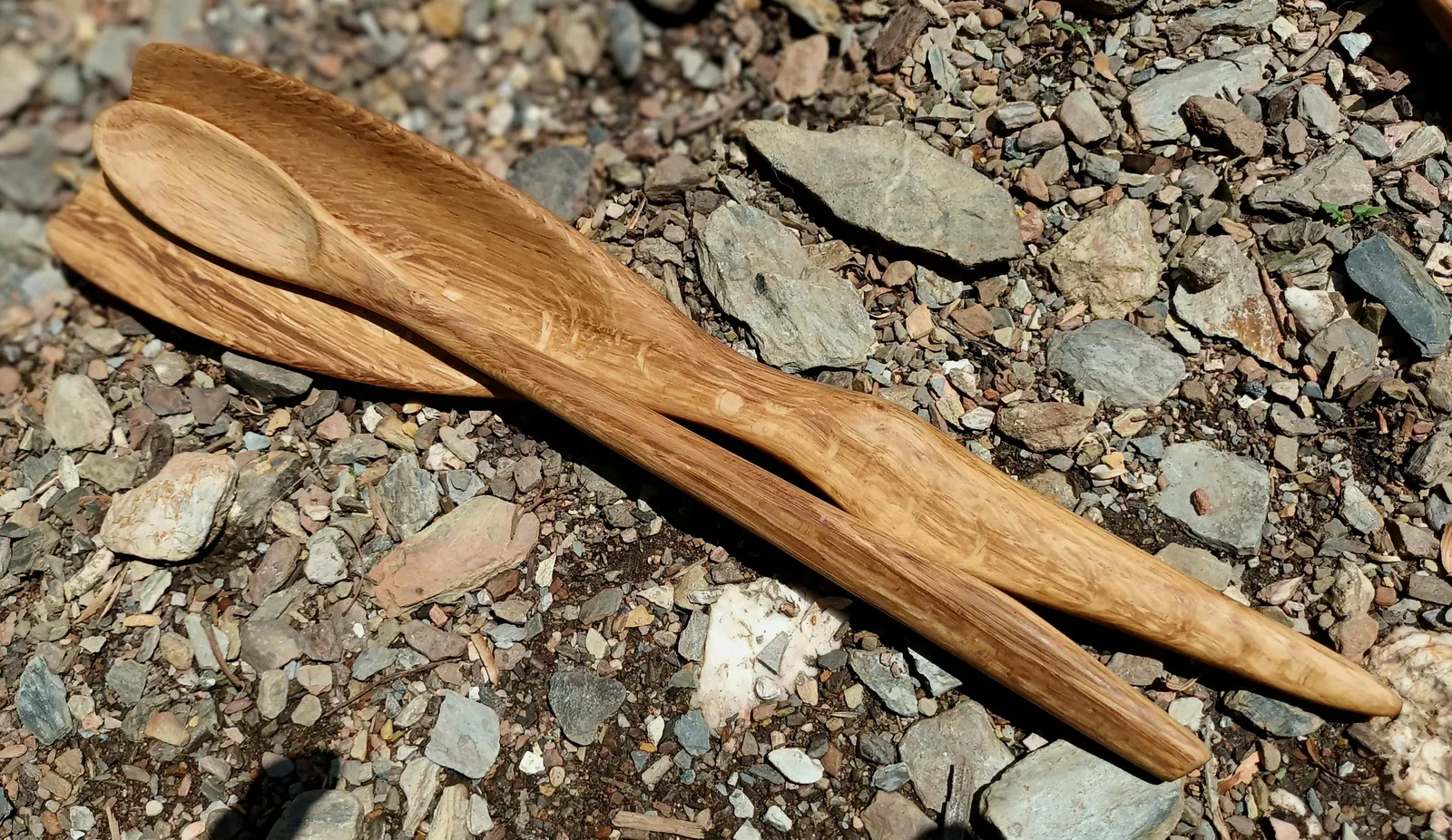
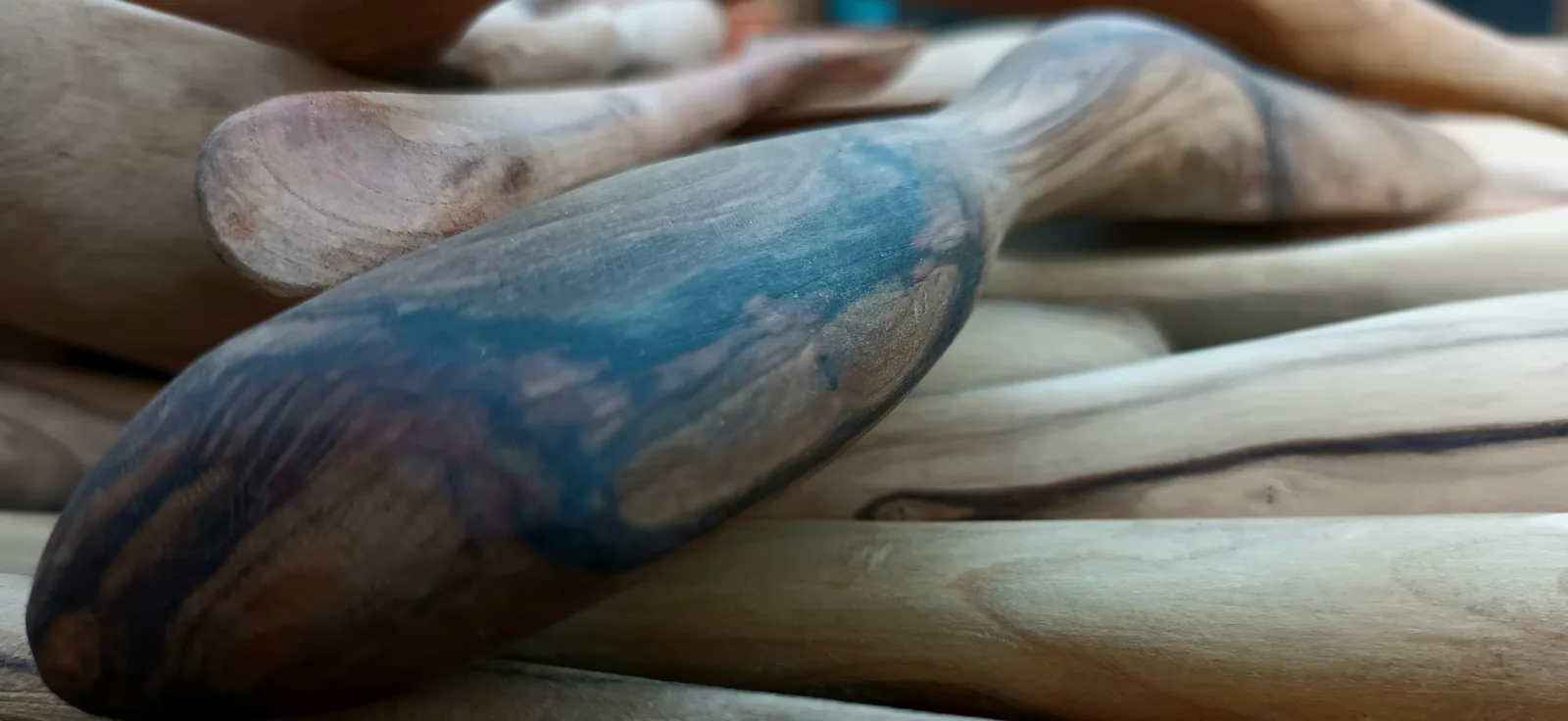
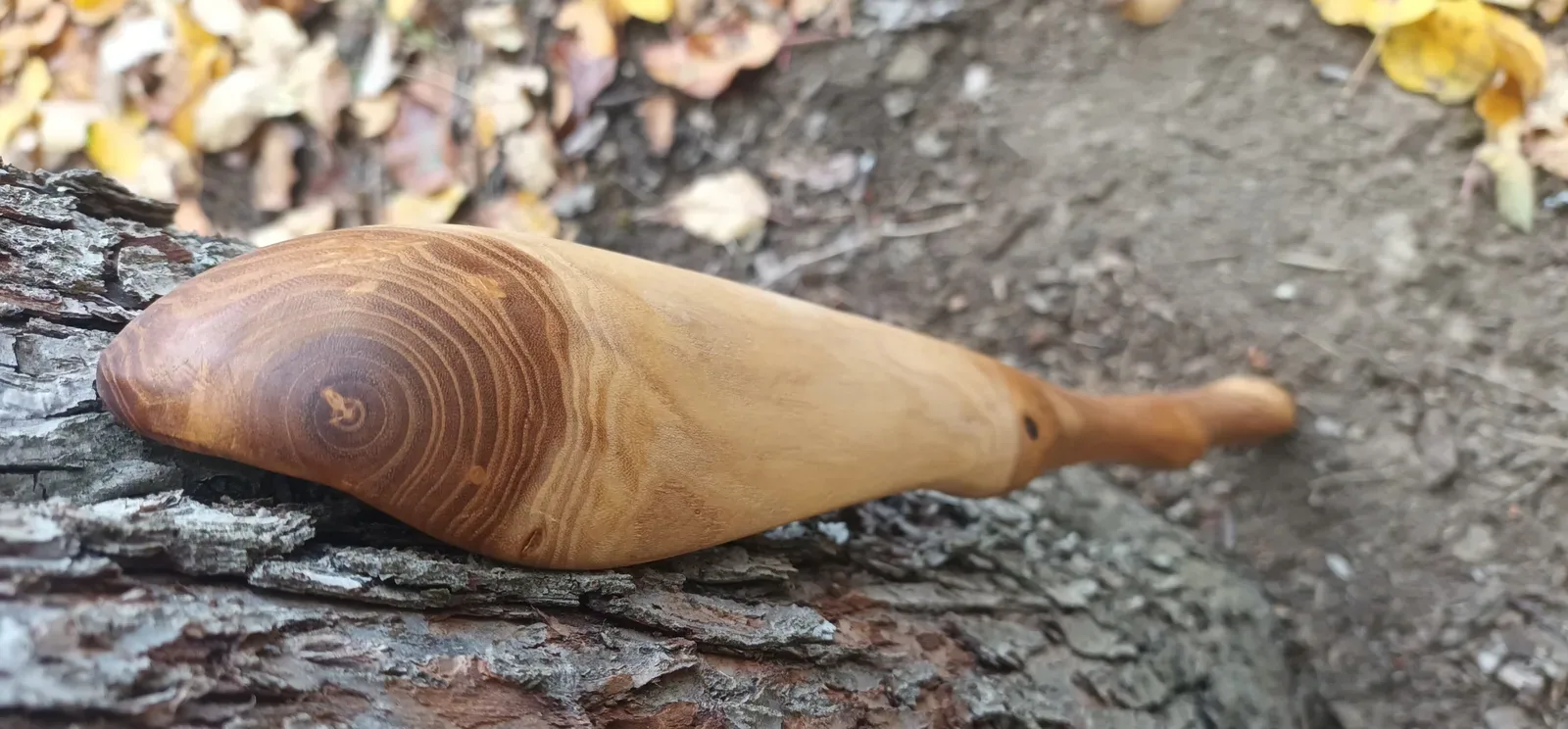
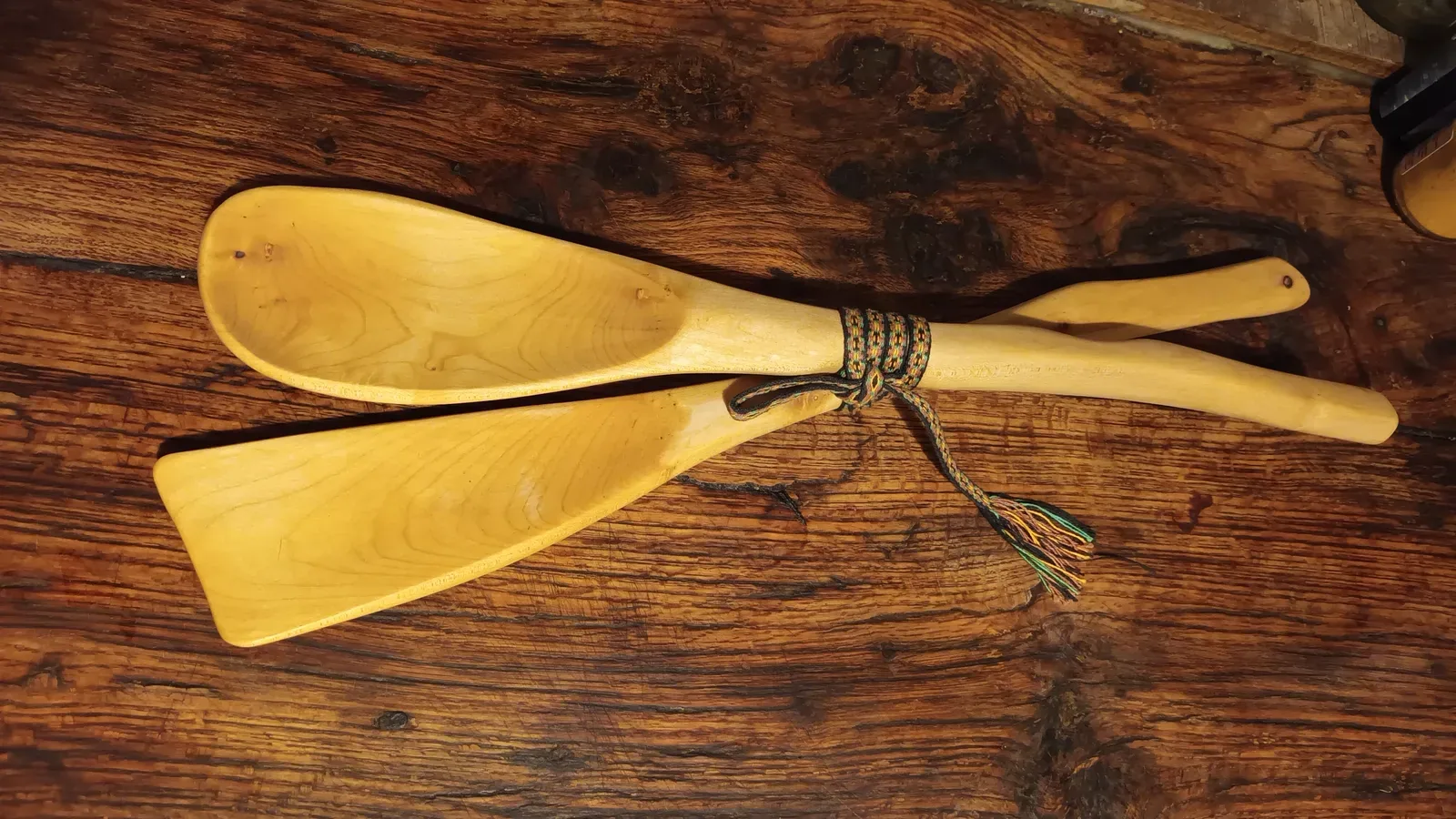
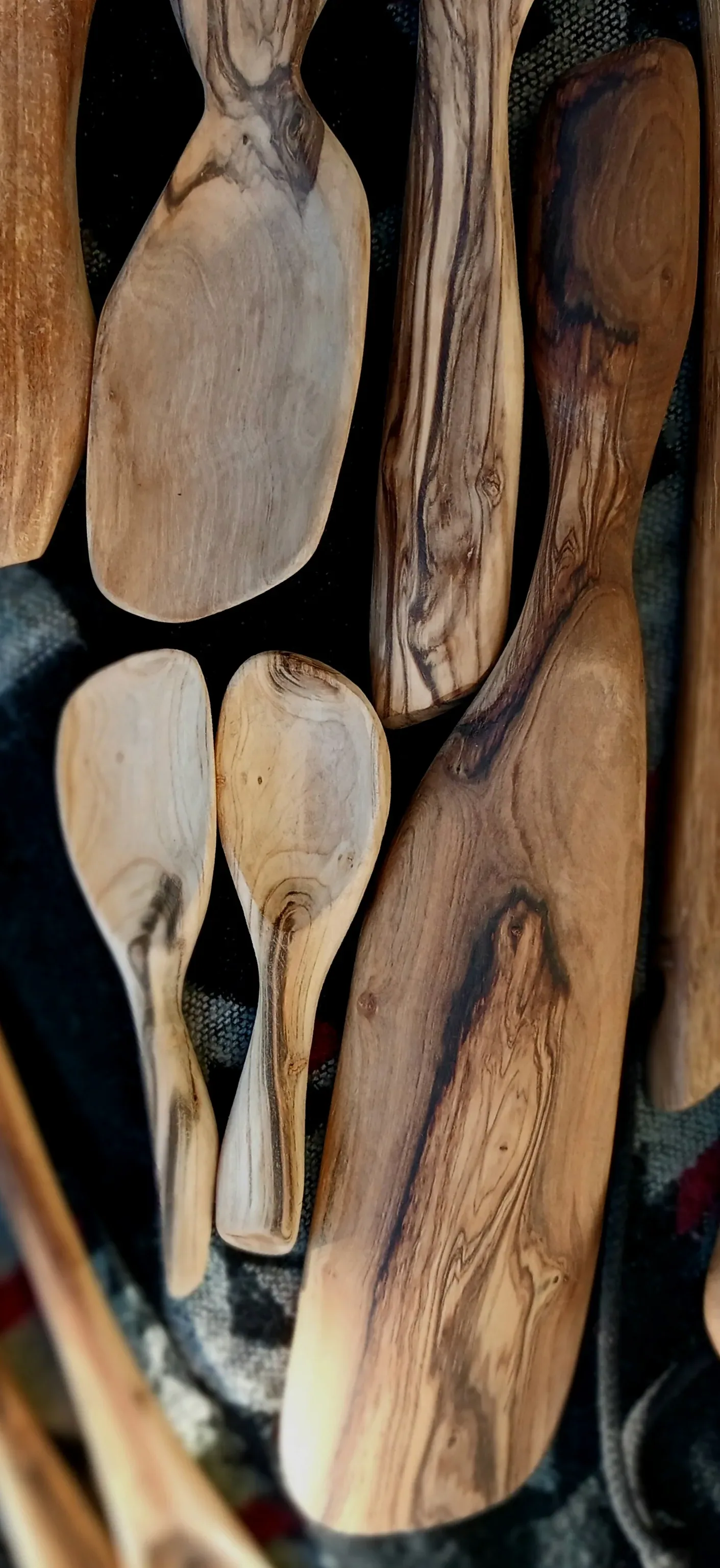
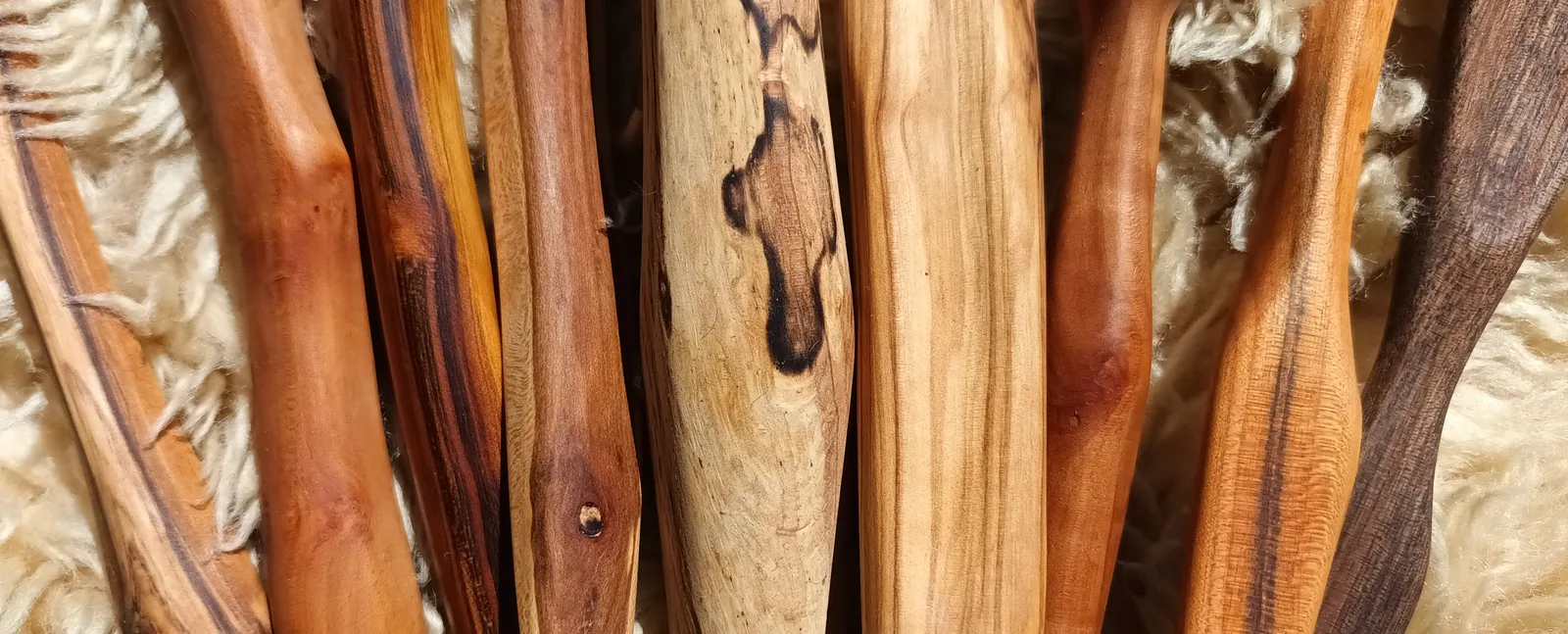
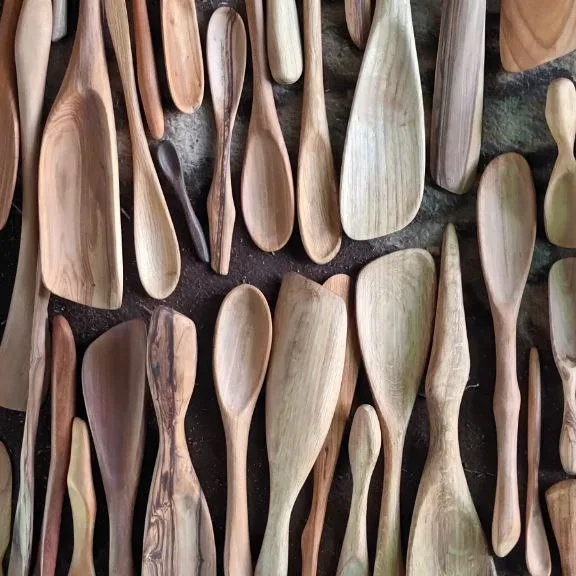
No saw. A wedge goes into a fresh log and the timber opens along its own lines of weakness. We never force a straight cut: we read the wood and guide the split.
Riving, or cleaving — still the foundation of green woodworking
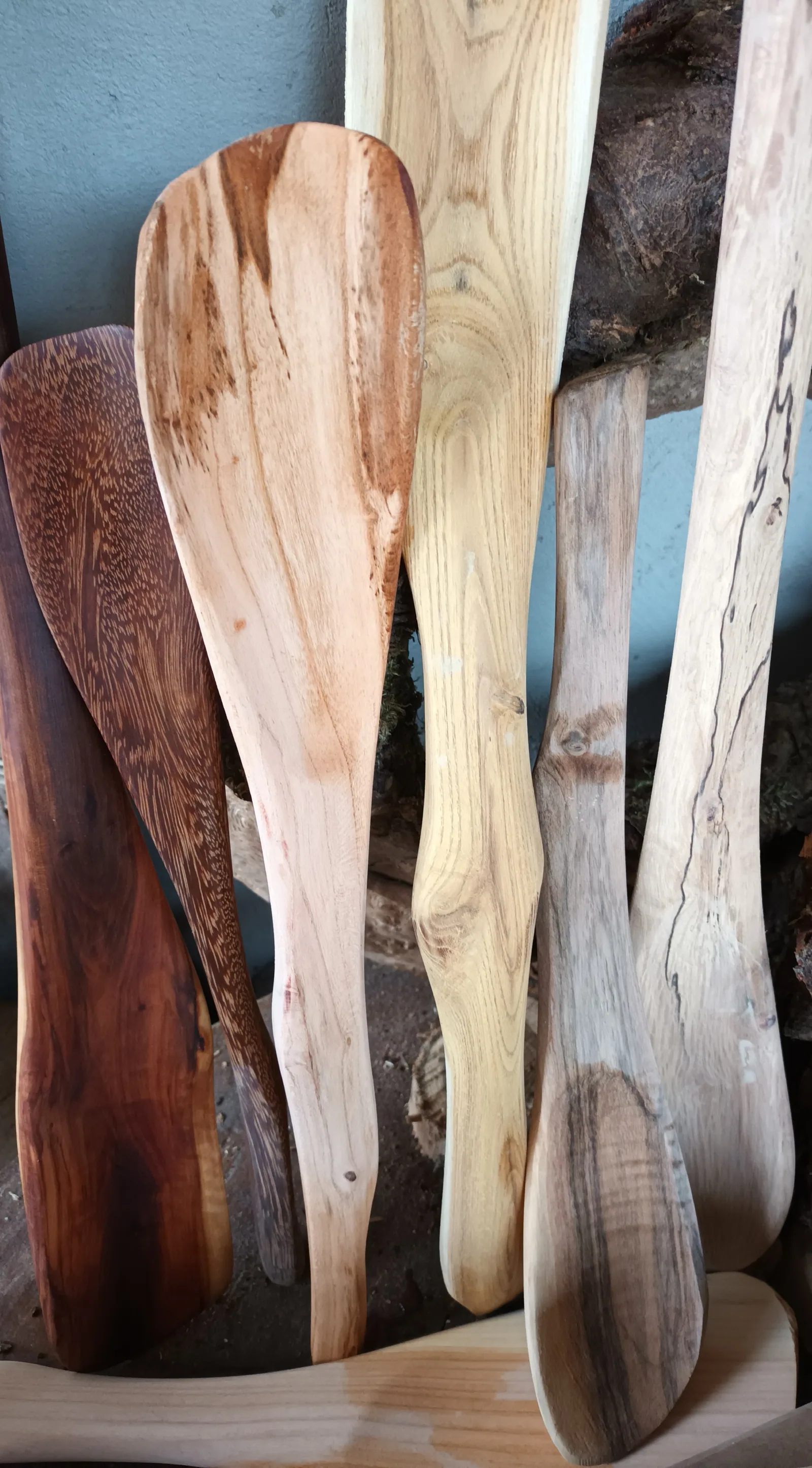
Green wood splits cleanest, and straight-grained cherry, walnut, oak, maple and plum repay the effort.
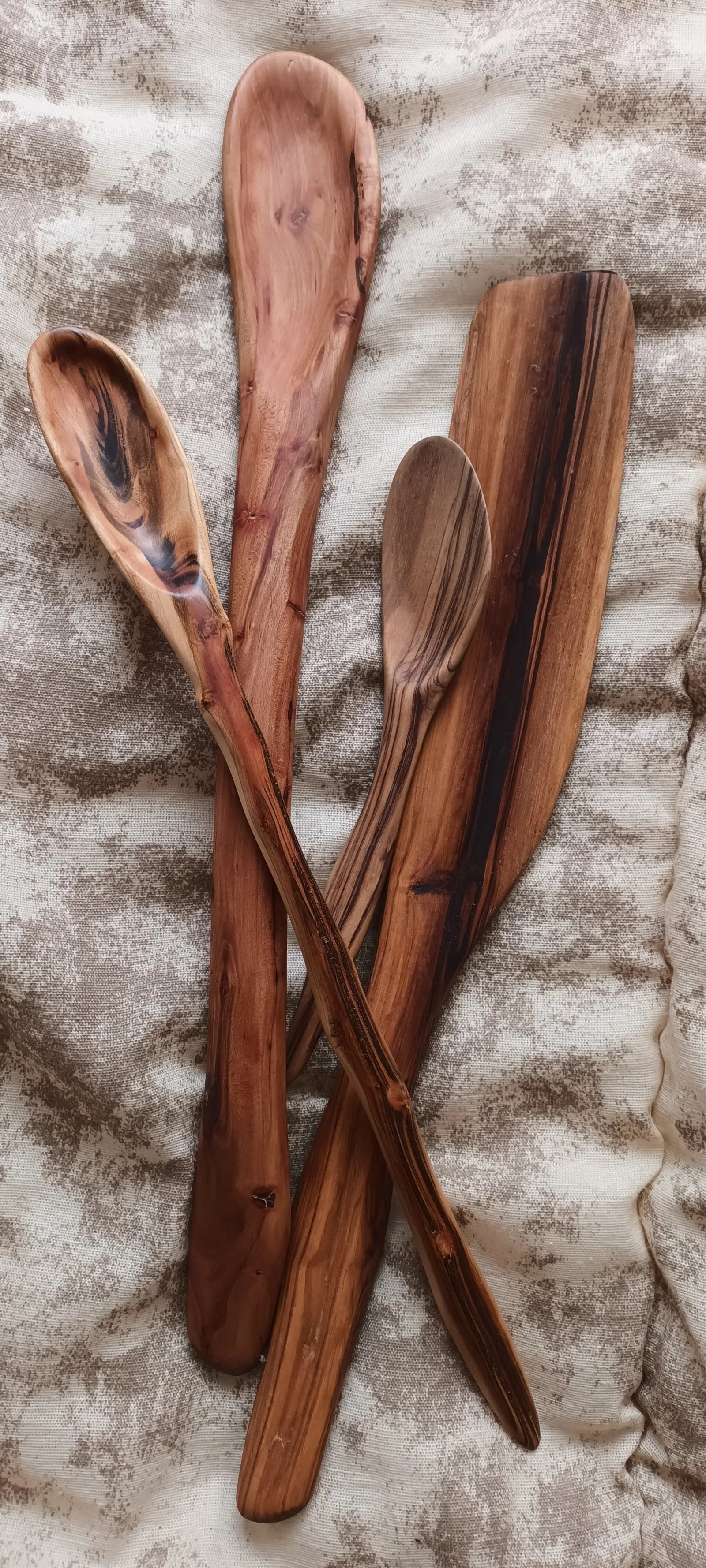
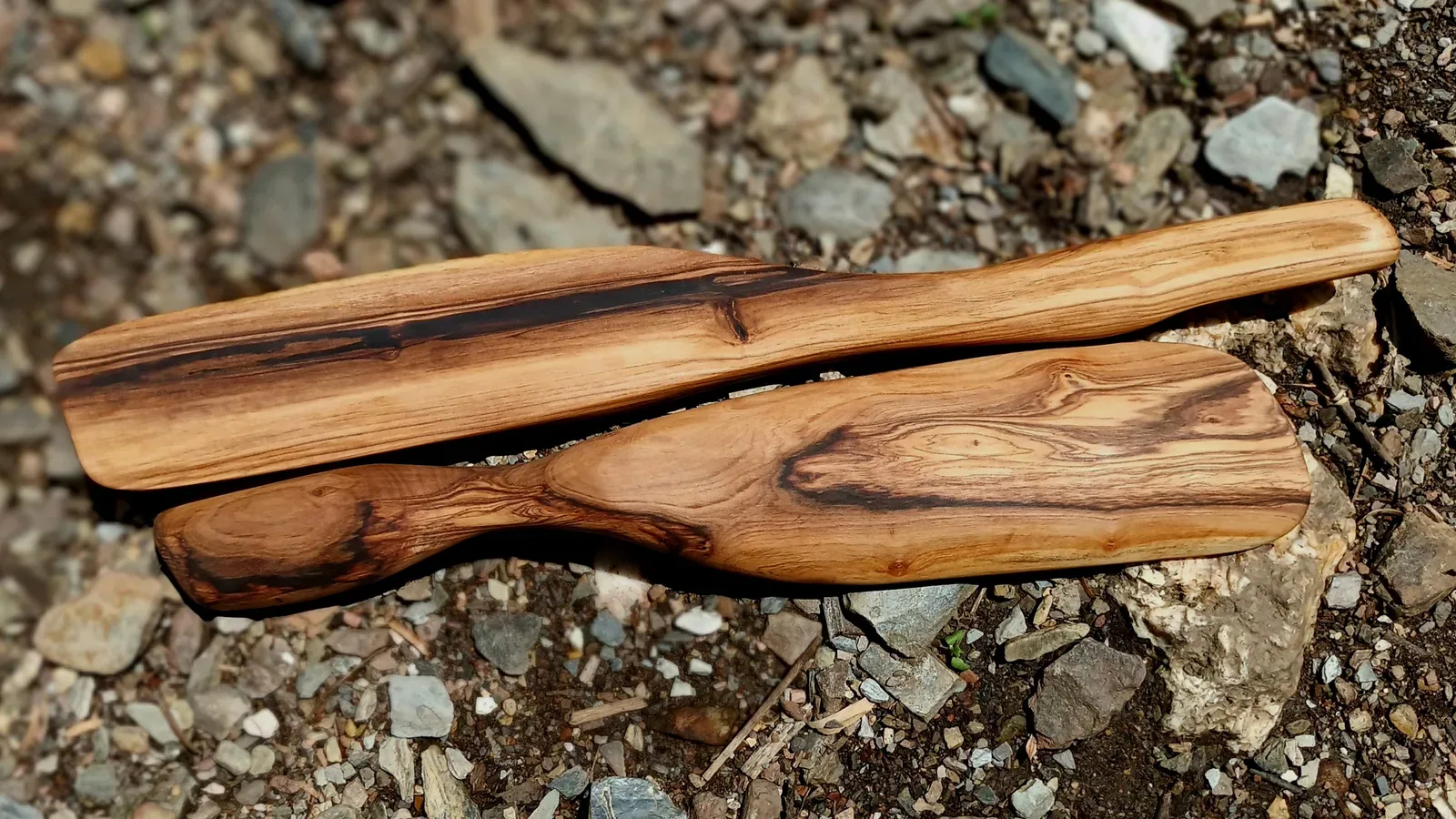
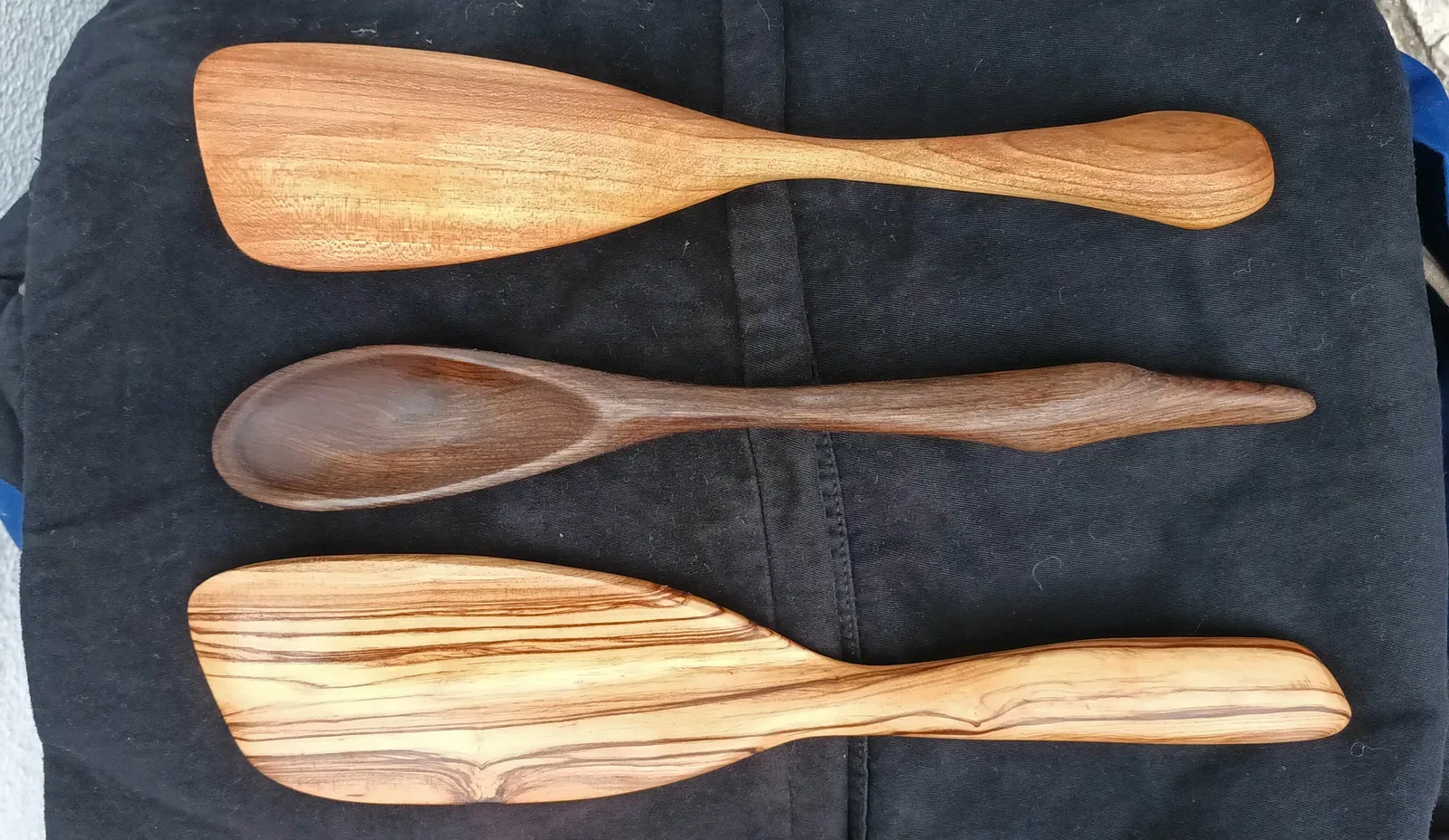
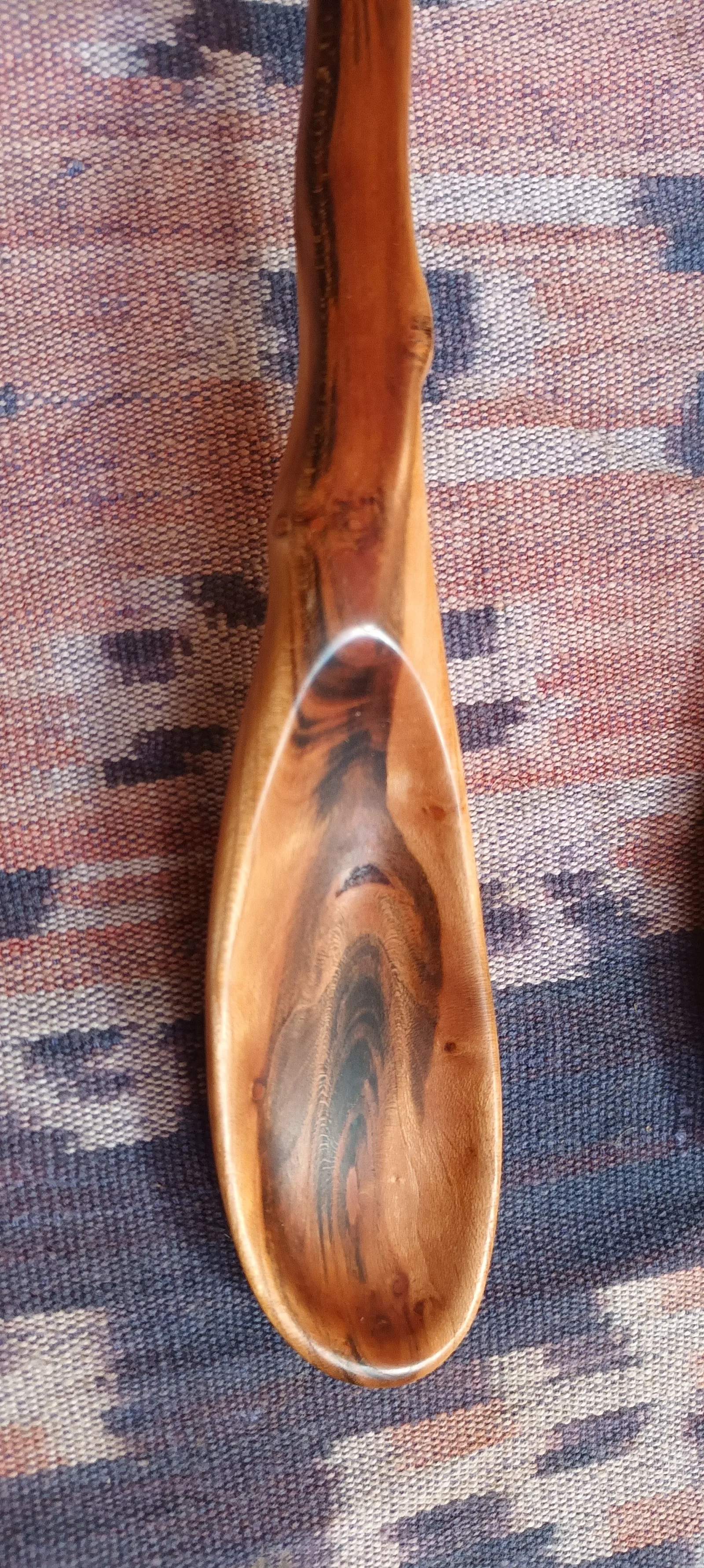
A riven blank keeps its fibres unbroken from the tip of the bowl to the end of the handle. That is why a riven spoon can have a slender neck and still not snap: the strength is in the grain, not in extra wood. It also dries more evenly, so it stays straight and does not crack along a hidden cut.
We don't cut wood to a plan. We split it, and follow the line the tree grew.
100% hand split
5native woods
0saw cuts across the grain
Why riven is stronger · 02
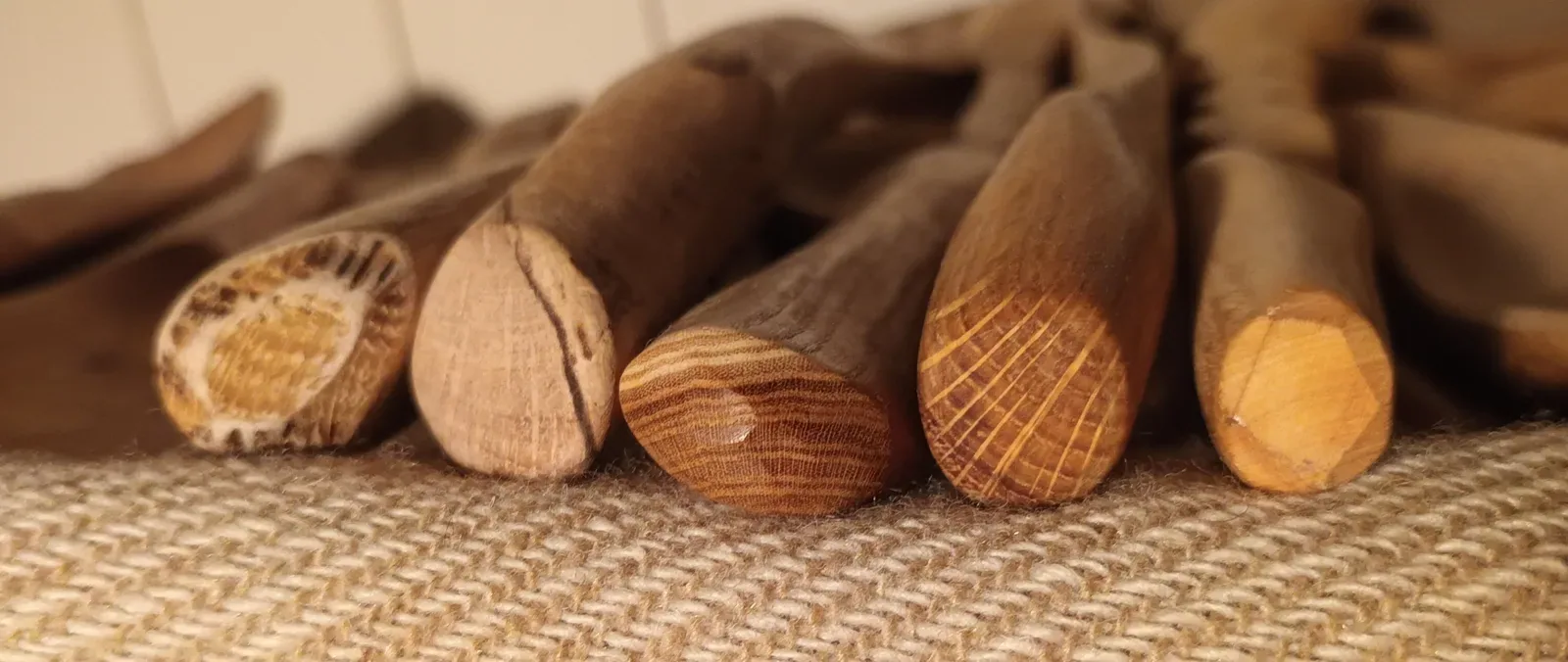
Every fibre whole
Five woods, one direction.
A saw cuts straight, whatever the tree did. Where the grain twists, it slices through fibres, and a cut fibre is where a spoon neck snaps. A split runs with the grain, so every fibre stays whole from end to end.
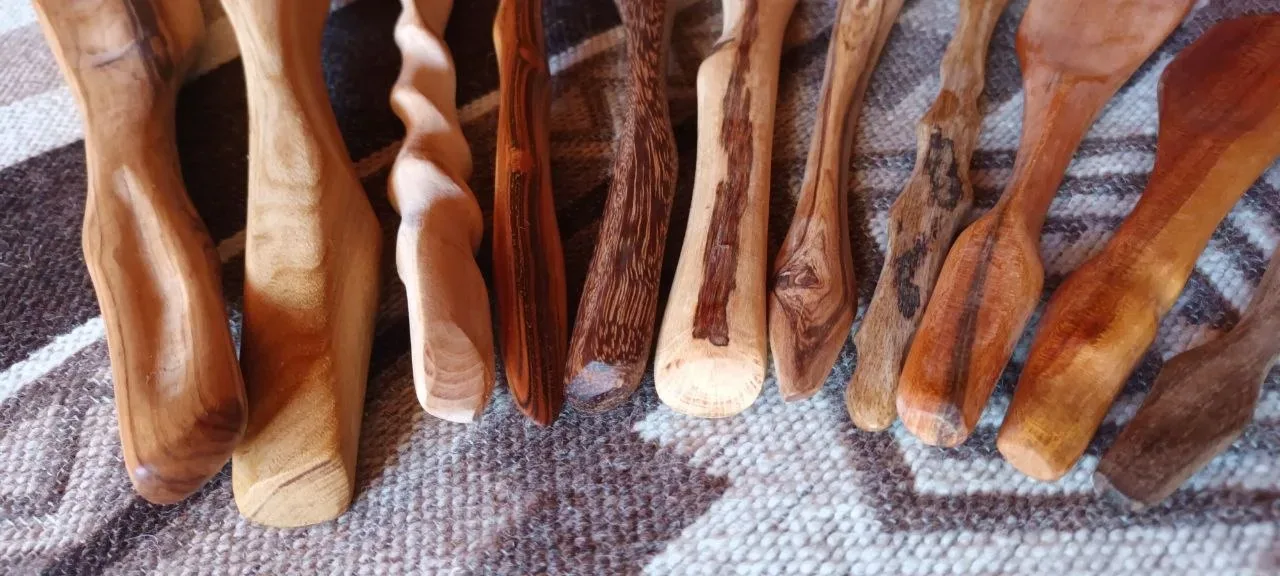
We choose straight, knot-free cherry, walnut, oak, maple and plum, felled green.
02
Rive with froe
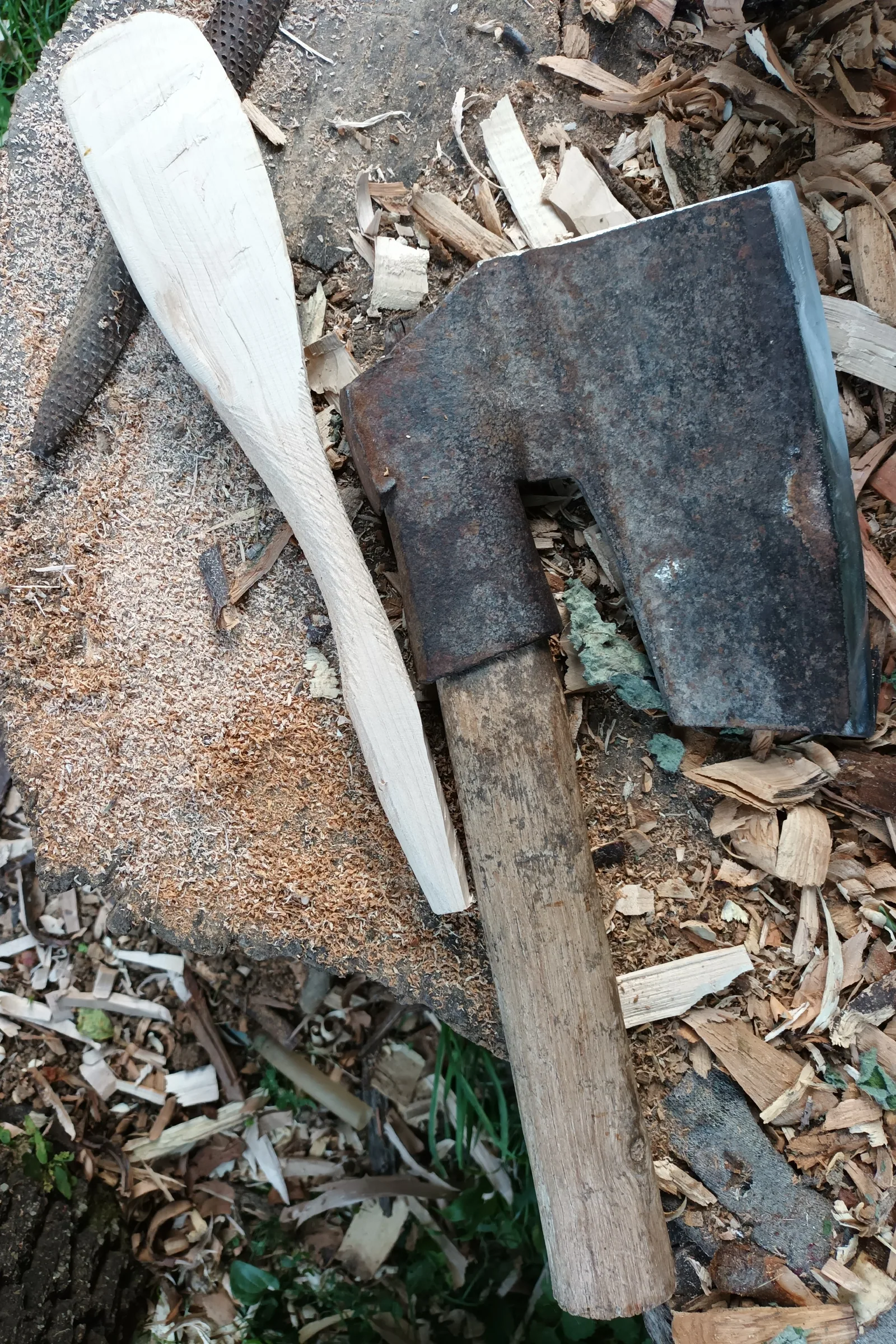
A wedge opens the log along its own lines. No saw ever crosses the grain.
03
Carve green
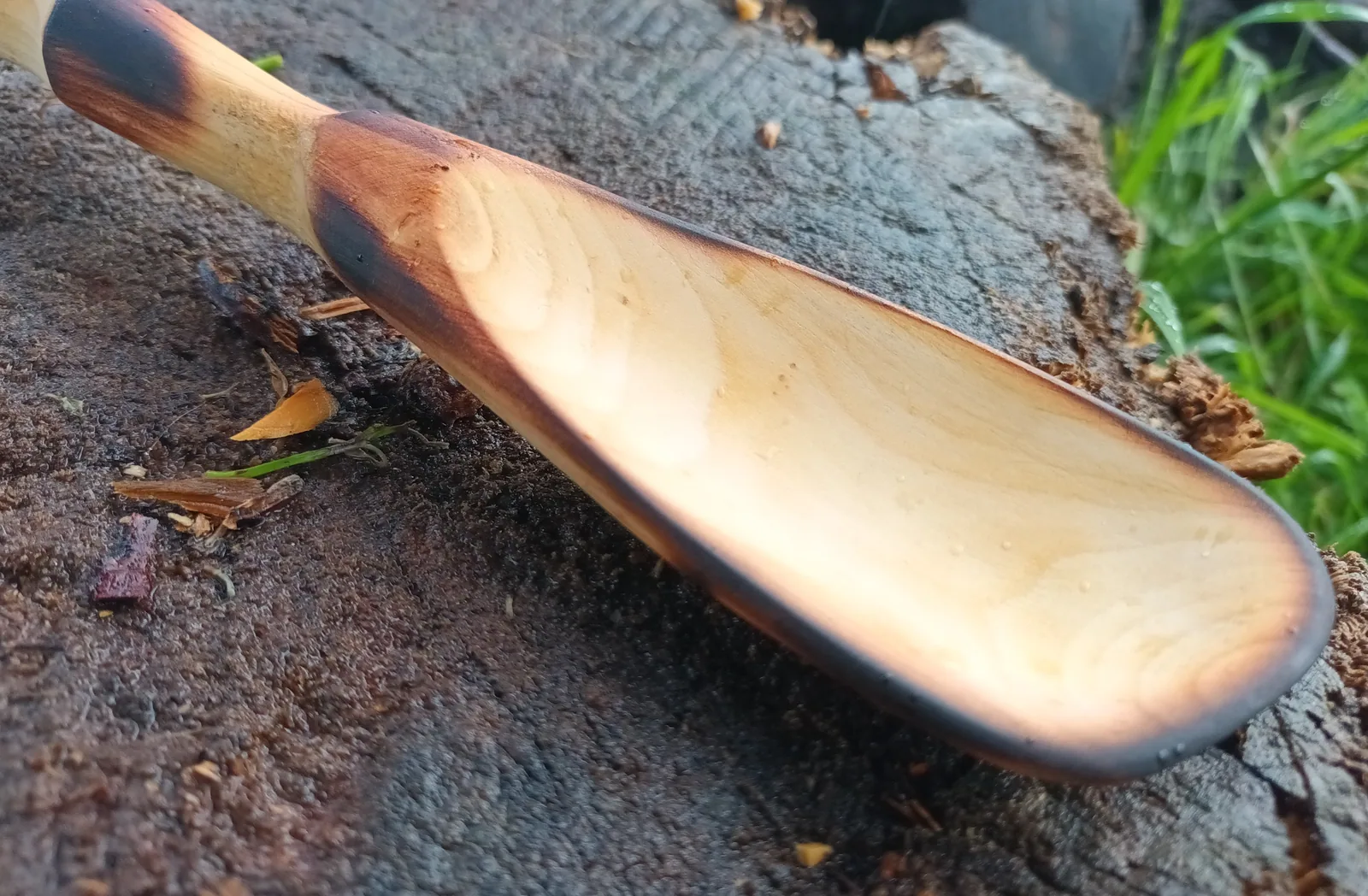
Axe and hook knife shape the blank while the wood is still soft and wet.
04
Dry & oil
Weeks of slow drying, then food-safe oil. Ready for a lifetime of use.
The workshop
Made by hand, one log at a time.
Every piece starts as a log that is split, never sawn. It is carved green with axe and knife, dried slowly for weeks, then finished with food-safe oil.
It is slow work. That is the point: a spoon made this way follows the tree, and it will outlast the kitchen it lives in.
Riven ArtRiftcurve workshop · Switzerland
“A split runs with the grain, so every fibre stays whole. That is why a riven spoon lasts.”
Spōn — Old English: a chip of wood, split off
What arrives
Opened like a gift
Every order is packed by hand and sent from Switzerland.
01
The piece
Oiled and ready to use from the first day.
02
Its card
The wood, where the tree grew and the piece number.